








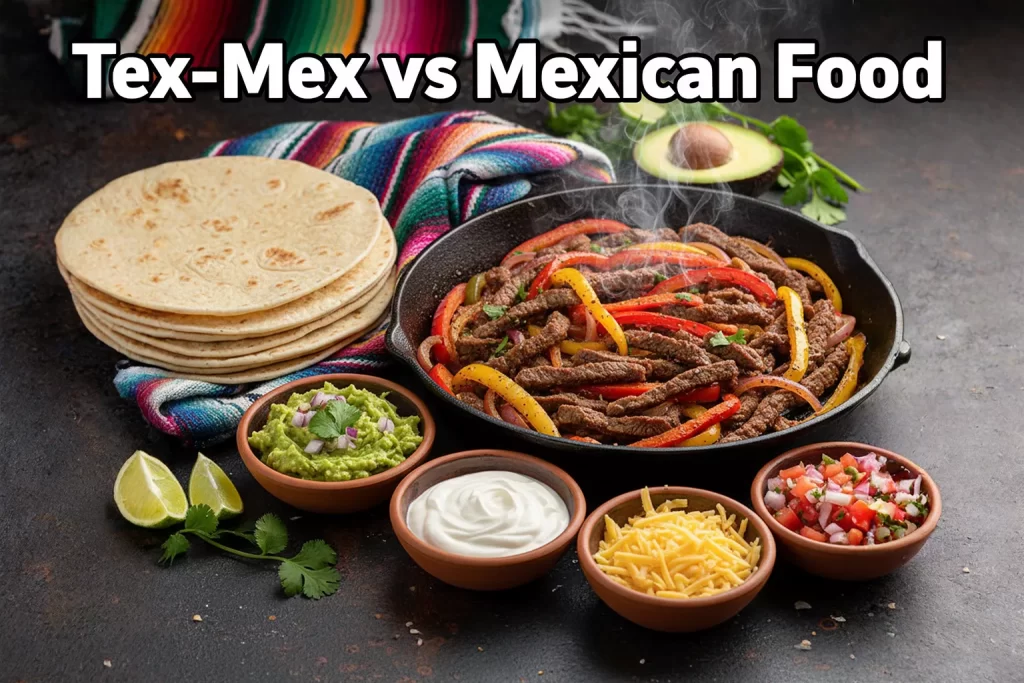
Mexican Food vs Tex Mex Explained
People mix these two up all the time, but Tex-Mex and Mexican food are very different once you know what to look for.
What Is the Difference Between Tex-Mex and Authentic Mexican Cuisine
Tex-Mex and Mexican food are often confused, especially outside North America. While they share similar roots, they are not the same cuisine. Understanding the difference helps set expectations when dining out and explains why flavours, ingredients, and portion sizes can feel worlds apart.
This guide clearly and straightforwardly breaks down the fundamental differences between Tex-Mex and Mexican food.
Origins and History
Authentic Mexican food comes directly from Mexico and is deeply rooted in Indigenous traditions, later influenced by Spanish colonial cooking. Many dishes date back hundreds of years and vary widely by region.
Tex-Mex originated in Texas, developed by Mexican American communities who adapted traditional Mexican recipes using American ingredients. Over time, it evolved into a bold fusion cuisine popular across the United States and globally.
Key Ingredient Differences
Mexican cuisine relies heavily on corn-based ingredients and fresh produce. Corn tortillas, dried and fresh chillies, tomatoes, onions, beans, rice, herbs, and slow-cooked meats form the foundation. Cheese is used sparingly and chosen for flavour rather than volume.
Tex-Mex uses more flour tortillas, ground beef, cumin-heavy seasoning, sour cream, and large amounts of melted cheese. Yellow cheese blends are standard and play a central role in many dishes.
Flavour Profiles Compared
Mexican food focuses on balance and depth. Flavours are layered, earthy, smoky, fresh, and sometimes spicy, but heat is rarely overwhelming. Sauces like mole can take hours or days to prepare and are designed to complement rather than dominate.
Tex-Mex is bold and indulgent. It prioritises richness and intensity, with salty, cheesy, and hearty flavours that hit immediately. It is designed to be filling and comforting.
Typical Dishes in Each Cuisine
Mexican food includes tacos al pastor, carnitas, barbacoa, tamales, pozole, chilaquiles, mole poblano, and street tacos served simply with onion and coriander.
Tex-Mex is known for fajitas served on sizzling plates, hard-shell tacos, oversized burritos, chilli con carne, loaded nachos, and enchiladas covered in cheese and sauce.
Portion Size and Presentation
Mexican dishes are often modest in size, emphasising quality and freshness over quantity. Presentation is simple and functional.
Tex-Mex portions are large and designed for sharing. Plates are often packed with rice, beans, cheese, sauces, and multiple sides.
How to Tell the Difference Quickly
If you see corn tortillas, fresh salsa, minimal cheese, and simple toppings, it is likely Mexican food.
If you see flour tortillas, melted cheese, sour cream, and oversized portions, you are eating Tex-Mex.
Which One Is Better
There is no better or worse. Mexican food shines through tradition, balance, and regional identity. Tex Mex delivers comfort, boldness, and indulgence. They serve different cravings.
Origins
Mexican food comes straight from Mexico, shaped by Indigenous, Spanish, and regional traditions that go back hundreds of years.
Tex-Mex was born in Texas, created by Mexican-American communities using local American ingredients. It is a fusion, not traditional Mexican.
Ingredients
Mexican food focuses on corn tortillas, fresh chillies, tomatoes, onions, herbs, beans, rice, slow-cooked meats, and complex sauces like mole. Cheese is used, but lightly and with restraint.
Tex-Mex leans heavily on flour tortillas, yellow cheese, sour cream, cumin-heavy seasoning, beef, and significant portions. Cheese is everywhere and usually melted.
Flavour profile
Mexican food is layered and balanced. Smoky, earthy, fresh, spicy, sometimes subtle. Heat is there, but it is not the main character.
Tex-Mex is bold and punchy. Rich, salty, cheesy, and filling. Flavours hit fast and loud.
Typical dishes
Mexican food includes tacos al pastor, carnitas, barbacoa, tamales, pozole, chilaquiles, mole poblano, and street tacos served simply with onion and coriander.
Tex-Mex gives you fajitas, nachos loaded with cheese, hard-shell tacos, burritos the size of your arm, chilli con carne, and cheese-smothered enchiladas.
Presentation and portions
Mexican food is usually focused and straightforward. Smaller portions, fewer toppings, letting the main ingredients shine.
Tex Mex is big, indulgent, and built for sharing. Plates are often overloaded with sides, cheese, and sauces.
The quick rule
If it is corn tortillas, fresh salsa, minimal cheese, and clean flavours, you are probably eating Mexican.
If it is flour tortillas, lots of melted cheese, sour cream, and huge portions, that is Tex-Mex.
Both are delicious. They are just playing very different games.
Final Thoughts
Tex-Mex and Mexican food share common roots but have grown into two distinct cuisines. Knowing the difference helps you choose the right experience and appreciate each for what it is.
Whether you crave authentic street tacos or a plate of cheesy comfort food, now you know precisely what you are ordering.
Now tell me honestly.
Are you team proper street tacos… or team cheesy Tex Mex comfort food 😌🌮🧀
Check out my visit to the Mexican Cafe in Auckland.